Anthropic prompt caching: writes are 12.5x–50x reads
Anthropic prompt caching has two prices: a write at 1.25x the input rate, a read at 0.1x, 0.05x or 0.025x by model. A write costs 12.5x to 50x a read.
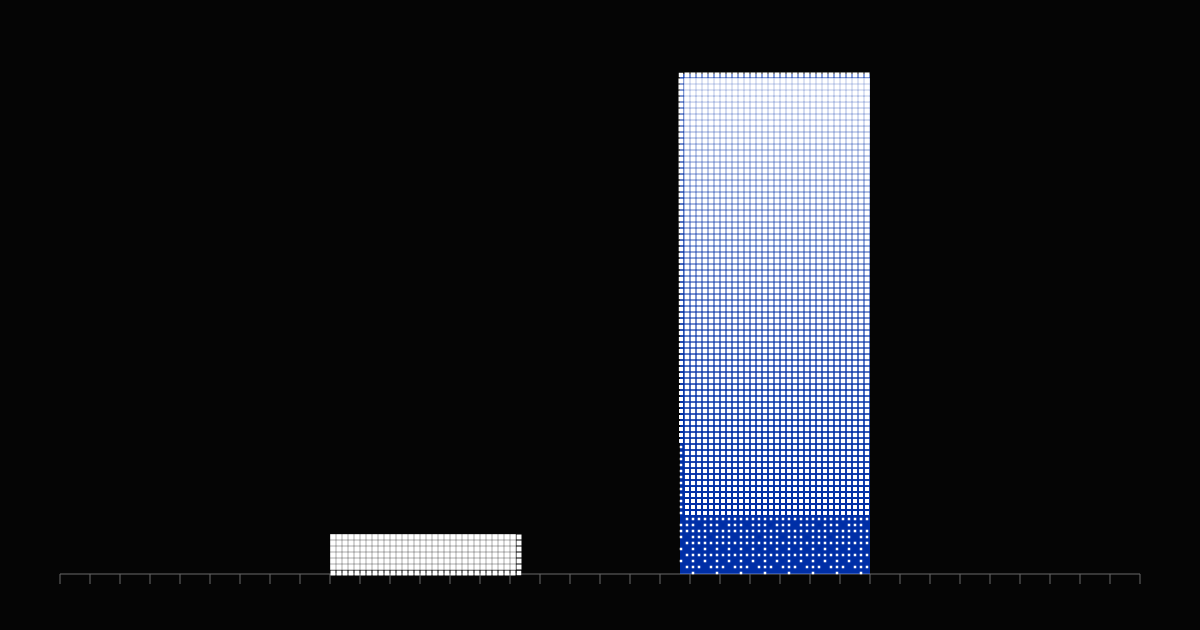
Prompt caching has two prices, and almost everyone budgets with only one of them.
A cache read — the thing everyone means by "caching" — costs 0.1x the normal input rate on most Anthropic models, 0.05x on Opus 5.5 and Sonnet 5.5, and 0.025x on Fable 5.2 and Fable 5.1 (Anthropic's pricing page, read 16 November 2026). A cache write, the act of filling the cache in the first place, costs 1.25x the input rate for the default 5-minute tier on every model. Per token, a written token costs 12.5, 25 or 50 times a read token, depending on the model. The write is not an implementation detail. It is the dominant term in whether caching saves you anything at all.
Here is what that does to one call. Take a 10,000-token prefix on a model whose input rate is $3 per million tokens and whose reads are the usual 0.1x:
prefix, uncached       10,000 × $3/M × 1.0     $0.0300
prefix, cache read     10,000 × $3/M × 0.1     $0.0030
prefix, cache write    10,000 × $3/M × 1.25    $0.0375
On that model the same bytes cost twelve and a half times as much to write as to read, before a single output token is counted. Per call the gap is narrower than per token, because output and any uncached input cost the same either way — but the direction never changes. If you have ever wondered why a "cached" agent's bill did not drop the way the read multiplier promised, the answer is usually sitting in the write column.
The write-to-read ratio, per model
The 5-minute write is 1.25x base input on every model. What moves is the read multiplier, so the ratio between a written token and a read token is one of three numbers. From Anthropic's pricing page, read 16 November 2026, in USD per million tokens:
| Model | Base input | 5-minute write | Cache read | Write ÷ read |
|---|---|---|---|---|
| Opus 5 | $5 | $6.25 | $0.50 | 12.5x |
| Haiku 5.5 (prompt up to 100K tokens) | $0.10 | $0.125 | $0.01 | 12.5x |
| Opus 5.5 | $4 | $5 | $0.20 | 25x |
| Sonnet 5.5 | $2 | $2.50 | $0.10 | 25x |
| Fable 5.2 | $8 | $10 | $0.20 | 50x |
The cheaper the read, the better a warm cache is, and the worse a cold one. On Fable 5.2 a prefix that writes on every call and never reads costs fifty times what the same prefix would have cost cached. The rest of this post uses the 0.1x case for its arithmetic; on the 0.05x and 0.025x models every conclusion holds and every gap is wider.
Why writes happen when you expected reads
A write is not an error. Something has to fill the cache before anything can read it, and on a healthy workload you see a thin stream of writes — one per TTL window per distinct prefix — with everything else reading. The problem is every write beyond that baseline, because each one is a call that should have found a live cache entry and did not. Four causes account for nearly all of them.
The prefix bytes changed. Caching is an exact byte match on the front of the request. A timestamp, a session id, a reordered tool array — any of them makes this call's prefix a new string, and a new string can only write. We wrote up the most common version of this in the timestamp post, and the tool-ordering variant in reordering your tools busts your cache. The write-heavy signature of both failures is identical: hit rate near zero, write count near call count.
The TTL expired. The default cache lives five minutes. An agent that runs every twenty minutes writes on every single run and never reads — it is paying the 1.25x premium on each call for a cache nothing ever comes back for. That prefix is 25% more expensive than not caching at all. The fix is either the 1-hour tier, which costs 2x to write and changes the arithmetic, or accepting that a low-frequency agent is not a caching candidate.
The prefix crossed under the model minimum. Anthropic ignores a cache breakpoint on a prefix below the model's published minimum — silently, while still accepting the request — so a prompt that shrank below the floor keeps "caching" in your code and stops caching in reality.
Different cache scope. A cache warmed by one workspace, or on one platform, does nothing for calls arriving from another. Two services sharing a prompt template do not share a cache entry unless they share the scope the provider isolates on.
The arithmetic that decides whether caching pays
For the standard 5-minute tier, one write plus N reads of the same prefix costs 1.25 + N × 0.1 input-units, against 1 + N units for sending the prefix uncached every time. Break-even is at exactly one read: a written entry that gets read a single time before it expires has already paid for itself (1.35 vs 2.0). Everything after that is nearly free.
Which means the whole question of caching collapses to one measurable number: how many reads does each write get? Above one, you win, increasingly. At zero, you are donating a 25% premium to nobody. And a winning ratio can still leave money on the table, because some writes are re-writes of content that already had a live entry — writes that should have been reads, which is its own post.
Why most teams don't know their ratio
Because the usage object makes it easy not to. Providers report cache_creation_input_tokens and cache_read_input_tokens as two more fields in a struct most telemetry sums into "input tokens" and forgets. The bill arrives as one number. Nothing in the default tooling ever confronts you with "this agent wrote 4,000 times and read 60" — you have to compute it, per agent, per prefix, and almost nobody does.
That is the measurement Vigil does per call: every logged call carries its write and read token counts separately, priced at their own multipliers, and the dashboard's Optimise view flags, per agent, when writes are outrunning reads. But you do not need Vigil to do this — you need the two fields your provider is already sending you, split out instead of summed.
What to do
Pull one day of your own usage logs and compute two numbers per agent: total cache_creation_input_tokens and total cache_read_input_tokens. If writes rival or exceed reads on any agent, that agent is paying the premium without collecting the discount — check the prefix for volatile bytes, check the call frequency against the 5-minute TTL, and check the prefix length against your model's minimum. And if you see zero in both columns on an agent you believed was cached, the breakpoint is either missing or being silently ignored, which is worse news delivered more quietly. To price both columns at your own model's rates, the token cost calculator takes cache writes and cache reads separately, and the prompt caching calculator works out what a cached prefix saves per day once the write is paid.